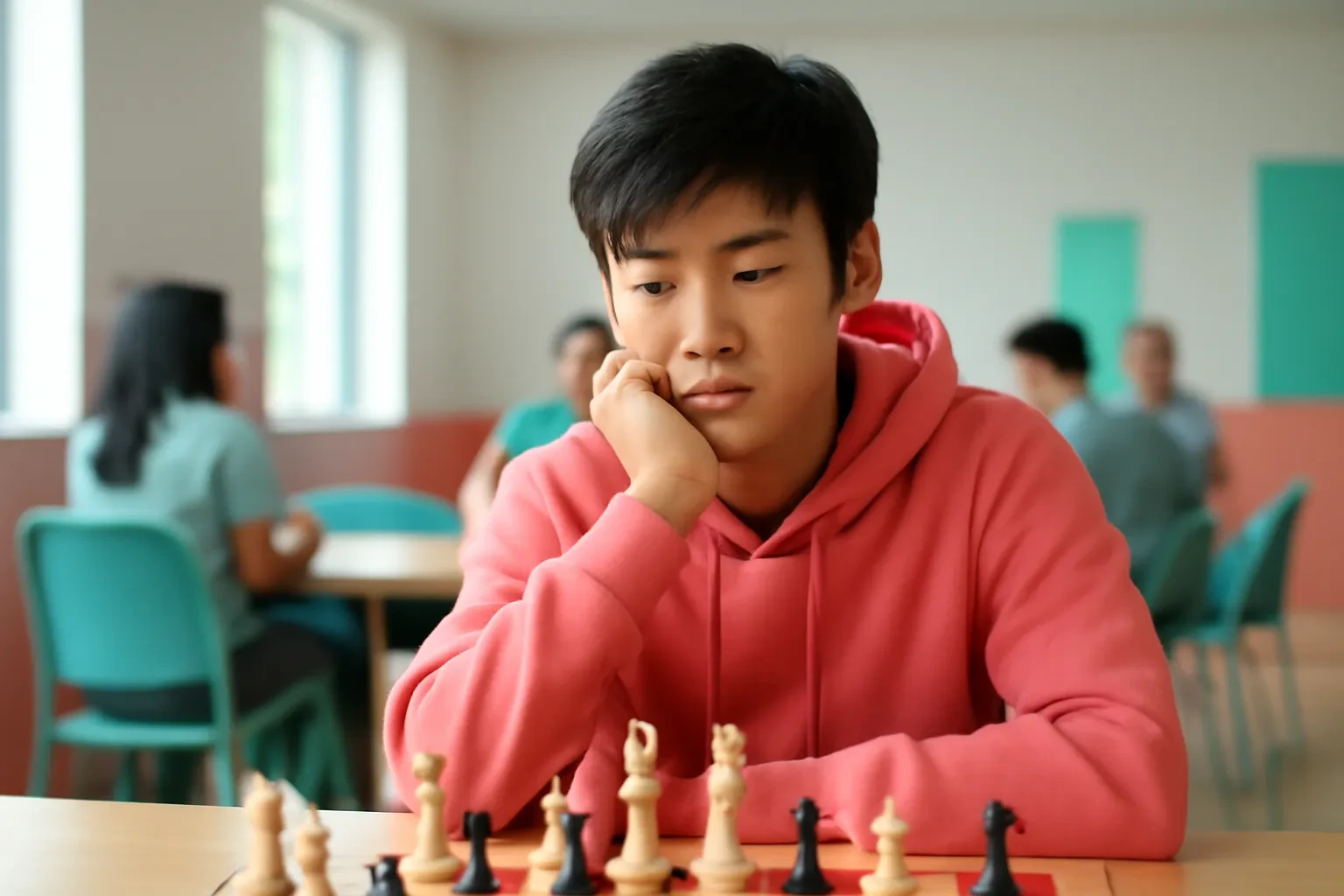
If you ask Go teachers where a beginner should start, nearly all of them give the same answer: the 9 × 9 board. It is not a toy version of the game. The rules are the same, and professionals play 9 × 9 seriously. But for someone learning, the small board is dramatically more effective. Here is why, and how to know when it is time to move up.
The board sizes
Go is traditionally played on 19 × 19, which has 361 points. The common smaller boards are 13 × 13 (169 points) and 9 × 9 (81 points). This site offers 9 × 9 and 13 × 13 against the computer, and all three sizes when playing people online.
Nothing changes in the rules between sizes. Liberties, capturing, ko, passing and scoring work identically.
Reason 1: many games, many lessons
A 9 × 9 game takes roughly five to fifteen minutes. A relaxed 19 × 19 game takes an hour or more. In the time of one big game, you can play five or six small ones — and each finished game is a complete lesson: an opening, fights, life and death, an ending and a count.
Beginners improve mostly by seeing the same situations again and again. The small board gives you many more repetitions.
Reason 2: every mistake is visible
On 19 × 19 a beginner can lose a group, not notice, and keep playing somewhere else for fifty moves. On 9 × 9, losing a group usually decides the game on the spot. That sounds harsh, but it is exactly what you want while learning: clear cause and effect. You learn to care about every group's safety.
Reason 3: fighting and reading from move one
On the small board there is no quiet opening phase. Stones touch almost immediately, and you have to count liberties, see atari, and decide whether a group can live. Those are the fundamental skills of Go. The small board trains them directly.
Reason 4: the whole board fits in your head
With 81 points, you can see the entire position at once. You can ask meaningful questions like "which of my groups is weakest?" and actually answer them. On the big board, beginners tend to wander from area to area without a plan.
What 9 × 9 does not teach well
The small board is not perfect. It gives less practice at:
- Opening strategy — on 19 × 19, the first dozen moves spread out over corners and sides, and choosing between them is a big skill. 9 × 9 openings are different: the centre point and the first contact fights matter much more. See opening on 9 × 9.
- Joseki — the standard corner sequences mostly assume a large board.
- Moyo and large-scale balance — building big frameworks and deciding between territory and influence.
That is why you should not stay on 9 × 9 forever.
When to move up to 13 × 13
Move to 13 × 13 when:
- You finish most 9 × 9 games without confusion about the end.
- You rarely lose groups to simple atari.
- You win regularly against the computer at a middle level.
The 13 × 13 board is the perfect bridge. Games take fifteen to thirty minutes, corners and sides begin to behave like on the big board, and the ideas from opening on 13 × 13 start to matter.
When to move up to 19 × 19
There is no fixed moment. Many players mix sizes for a long time: 9 × 9 for quick practice, 13 × 13 for learning openings, and 19 × 19 when they have an hour and want the full experience. When 13 × 13 openings feel natural and you can keep track of three or four groups at once, try the big board against a person on the online page.
A practical routine
- Weeks 1–2: only 9 × 9, as many games as you like, against the computer on the home page.
- Weeks 3–4: mostly 9 × 9, plus one or two 13 × 13 games a week.
- After that: 13 × 13 as your main size, 9 × 9 for warm-ups, 19 × 19 occasionally.
Keep your games saved on your account and replay the ones you lost; small-board games are short enough to review in a couple of minutes.
Common worries
"Is 9 × 9 real Go?" Yes. The rules are the same and the game is deep; strong players and computers treat it seriously.
"Won't small boards give me bad habits?" Some ideas do not transfer — for example, how early you can play in the centre. But the core skills (reading, life and death, connection) transfer completely. Moving to 13 × 13 before 19 × 19 smooths the transition.
What a 9 × 9 game feels like
The first few moves are often in or near the centre, and contact comes quickly. After about ten moves, each side usually has two or three groups and a rough idea of its territory. The middle of the game is a series of short fights: can this group live, can that cut work, who controls this side? By move thirty or forty, borders close, and the game ends shortly after. Every phase of Go happens, just compressed.
That compression is exactly why the small board is such an efficient teacher. The patterns you meet — a group squeezed against the edge, a cut that splits two weak groups, a ko on the side — appear again and again, and you learn to recognise them.
Small boards for families and schools
Small boards also make Go easier to share. A 9 × 9 game fits into a lunch break, a short evening with a child, or the last ten minutes of a class. Children in particular do much better with a board they can take in at a glance, and parents who are learning alongside them can keep up. When a whole family learns on 9 × 9 together, the step to bigger boards later feels like a natural adventure rather than a wall.
Frequently asked questions
How long is a 9 × 9 game?
Usually five to fifteen minutes at a relaxed pace.
Is komi the same on small boards?
On this site komi is 7.5 on every size. Because the first move is especially important on 9 × 9, the exact fair value is debated, but 7.5 is widely used.
Can I play 19 × 19 against the computer here?
Not at the moment. The computer plays 9 × 9 and 13 × 13; 19 × 19 is available against people online.
Should I learn joseki on 9 × 9?
No. Joseki mainly belong to the bigger boards. On 9 × 9, focus on fighting, connection and life and death.
How do I know I am ready for 13 × 13?
When 9 × 9 games feel understandable from start to finish and you win regularly against a middle-level computer, try 13 × 13.