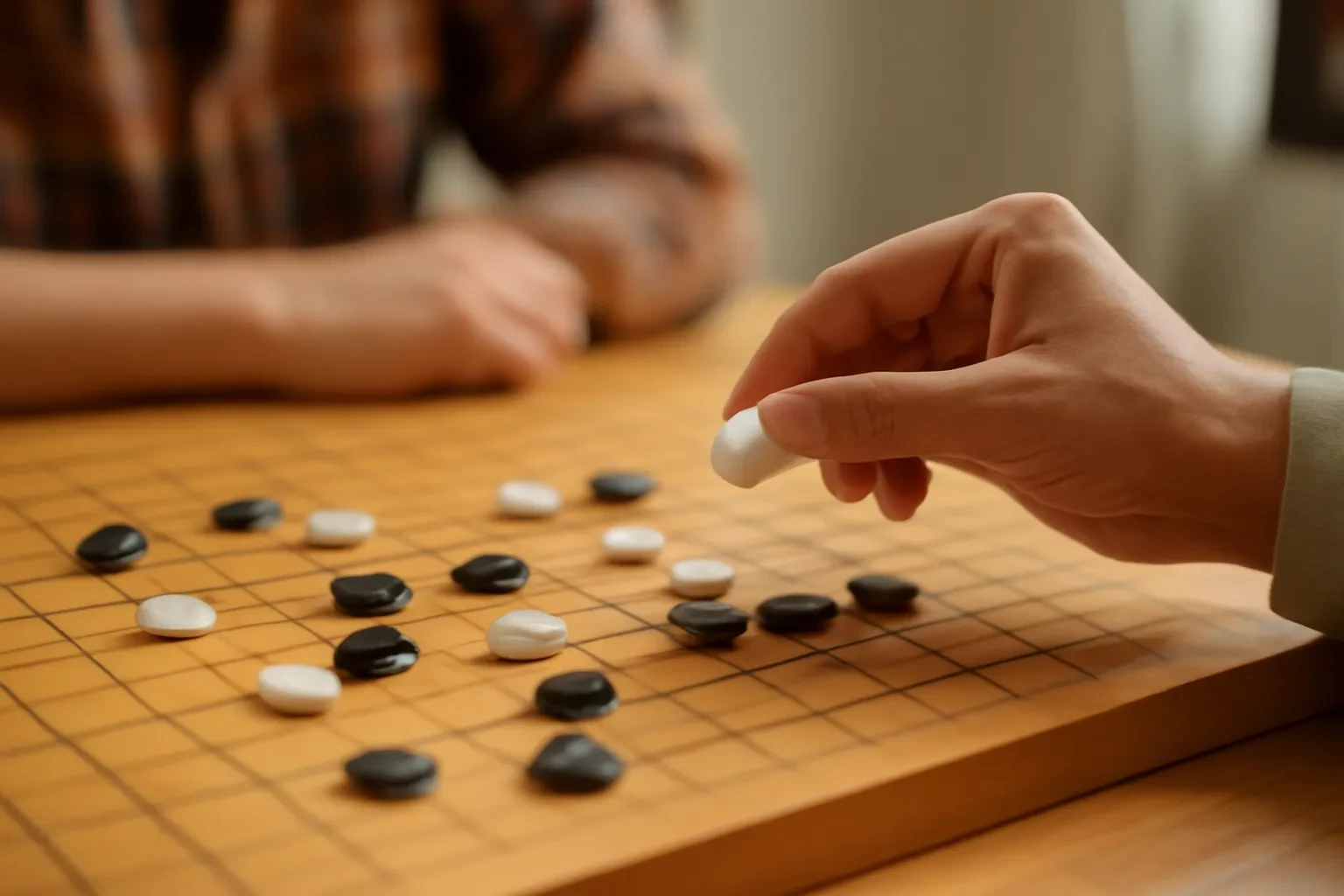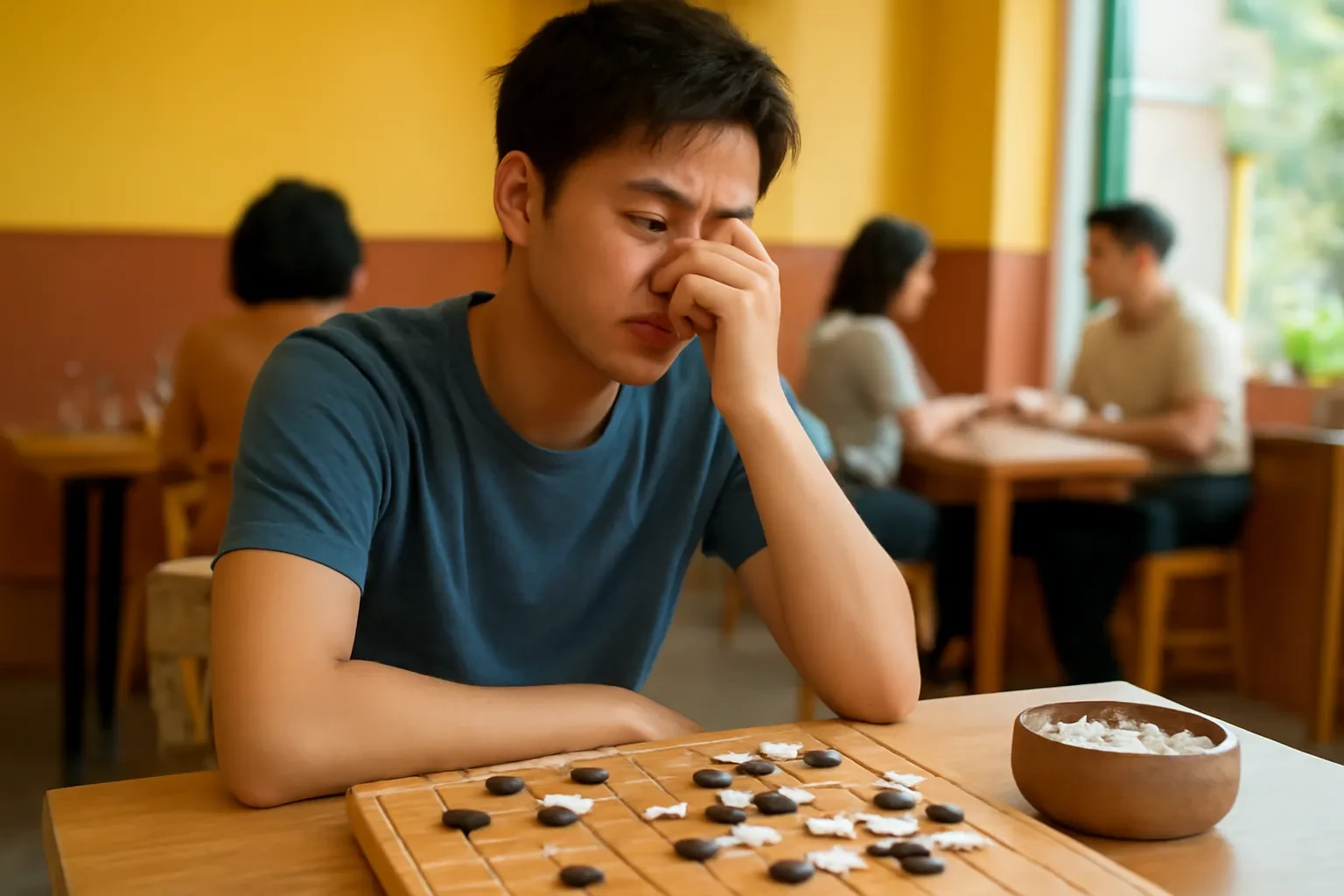
Plenty of Go games are won in the middle and lost in the endgame. The fighting went well, the territories looked good, and then, one small move at a time, the lead disappeared. Endgame mistakes rarely feel dramatic. That is exactly why they are dangerous: you do not notice them while they happen.
Here are eight of the most common endgame mistakes, why they happen, and a simple habit that fixes each.
1. Playing the first move you see
The mistake: once the fighting stops, many players fill in borders in whatever order their eye lands on them. A one-point move gets played while a six-point move is still open.
The fix: before each endgame move, look at every open border and ask which is biggest. It takes a few seconds and changes the result more than any other habit. The article on endgame move values shows how to compare them.
2. Answering every forcing move
The mistake: your opponent plays a move near your territory, and you answer automatically, even when ignoring it would cost only a point and a bigger move is available.
The fix: before answering, ask what happens if you ignore it. If the loss is smaller than the biggest move elsewhere, play elsewhere. The skill of ignoring a move on purpose is called tenuki, and it is essential in the endgame.
3. Ending your own sequences in gote
The mistake: you close a border with a sequence that finishes with your move, handing the initiative to your opponent, when a slightly different sequence would have ended in sente.
The fix: when you have a choice of shapes, prefer the one after which your opponent must answer. Ask "who moves next?" before committing. See sente and gote in the endgame.
4. Leaving cutting points at the border
The mistake: you push into your opponent's side with a hane, and they cut behind it. Now you lose stones or have to spend moves saving them, and the hane that looked profitable becomes a loss.
The fix: before every border move, check whether it leaves a cutting point. If it does, either add a protecting move first or choose a more solid shape. The article on closing borders covers the common shapes.
5. Ignoring shortage of liberties
The mistake: near the end, both players fill neutral points. One of those fills removes the last outside liberty of your group, and suddenly a hidden weakness becomes a capture.
The fix: before filling any neutral point, count the liberties of your groups around it. If a group would drop to one or two liberties, add a protecting stone inside your territory first. Under area scoring, which this site uses, that stone costs nothing, because it counts as a point.
6. Passing too early
The mistake: you think the game is over and pass while borders or neutral points remain. Your opponent keeps playing and gains points.
The fix: before passing, scan the whole board for open borders and empty points touching both colours. On this site, neutral points are worth a point each under area scoring, so fill them before passing.
7. Leaving dead stones on the board
The mistake: an opposing stone is clearly dead inside your territory, so you do not bother capturing it. Then both players pass, and the site counts the stones as they stand. The dead stone counts as alive, and it may spoil the points around it.
The fix: on this site the game ends after two passes and the score is counted from the stones on the board. Capture every dead stone before you pass. It costs a few moves inside your own territory, but under area scoring those moves are free, because your own stones count as points.
8. Playing too fast because the game "is decided"
The mistake: the endgame feels like a formality, so you speed up. Mistakes multiply exactly when you stop reading.
The fix: keep the same pace until the last move. If you are playing with a clock, save time for the endgame by not overthinking obvious opening moves. On the online page you can choose time controls; if you rush endgames, pick a slower one.
Why these mistakes are so common
Most endgame mistakes come from one attitude: treating the end of the game as less important than the middle. In reality, the endgame is where a close game is decided. Players who respect it gain points steadily; players who do not give them away without noticing.
The good news is that endgame skill improves faster than most other skills. The moves are small and concrete, and the habits above are simple. A few weeks of paying attention usually shows up in results.
A review routine
The fastest way to find your own endgame mistakes is to review your games:
- Sign in on the account page so your games are saved.
- After a game, replay it from the moment the last group was settled.
- For each of your moves, ask: was this the biggest move, was it sente or gote, and did it leave a weakness?
- Write down the one mistake that cost the most, and watch for it in your next game.
Small boards help. On 9×9 against the computer on the home page, the endgame starts after a few dozen moves, so you can practise it every game.
One more habit: count before the endgame starts
A surprising number of endgame mistakes come from not knowing the score. If you think you are far ahead, you relax and give away points. If you think you are far behind, you take wild risks in positions that were actually close. Before the endgame begins, spend thirty seconds on a rough count: your territory, your opponent's territory, and komi for White, which is 7.5 on this site.
With the count in mind, your endgame decisions change. When you are slightly ahead, you choose safe shapes and remove every weakness. When you are slightly behind, you look for the few sente moves and invasions of the edge that might gain the points you need. Either way, you stop playing on autopilot. Knowing the score is not only for the final result; it guides every move in the last part of the game.
Frequently asked questions
What is the most common endgame mistake?
Playing moves in the wrong order: small moves while bigger moves are still available.
Should I always answer my opponent's endgame moves?
No. Answer only when ignoring would cost more than the biggest move elsewhere.
Why should I capture dead stones before passing?
Because this site counts the stones on the board after two passes. Dead stones left in your area count as alive.
Is it worth filling neutral points?
Yes, under area scoring each neutral point is worth one point. Check your liberties first.
How can I improve my endgame quickly?
Review the endgame of each game you play, looking for moves played in the wrong order and borders closed with weaknesses.