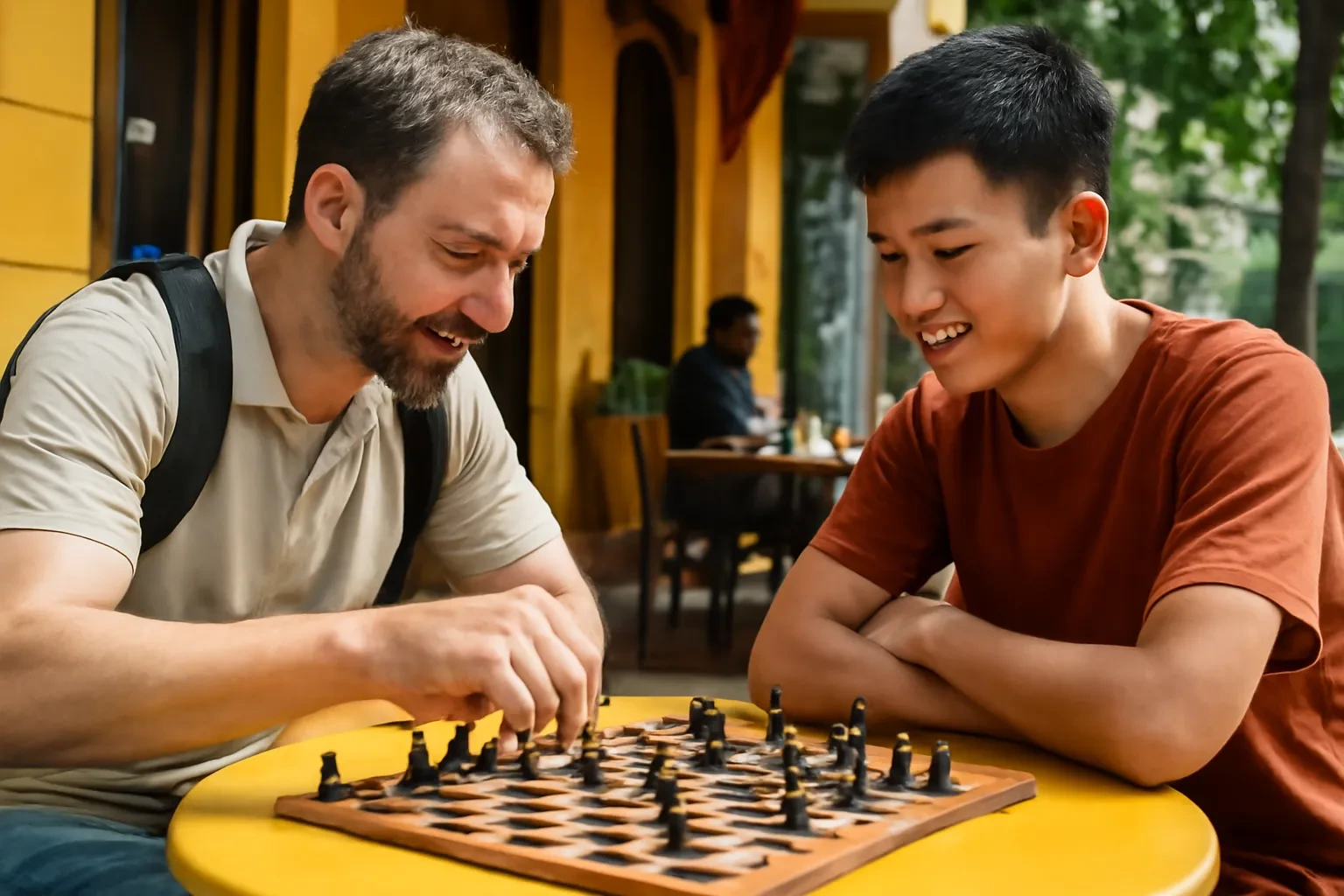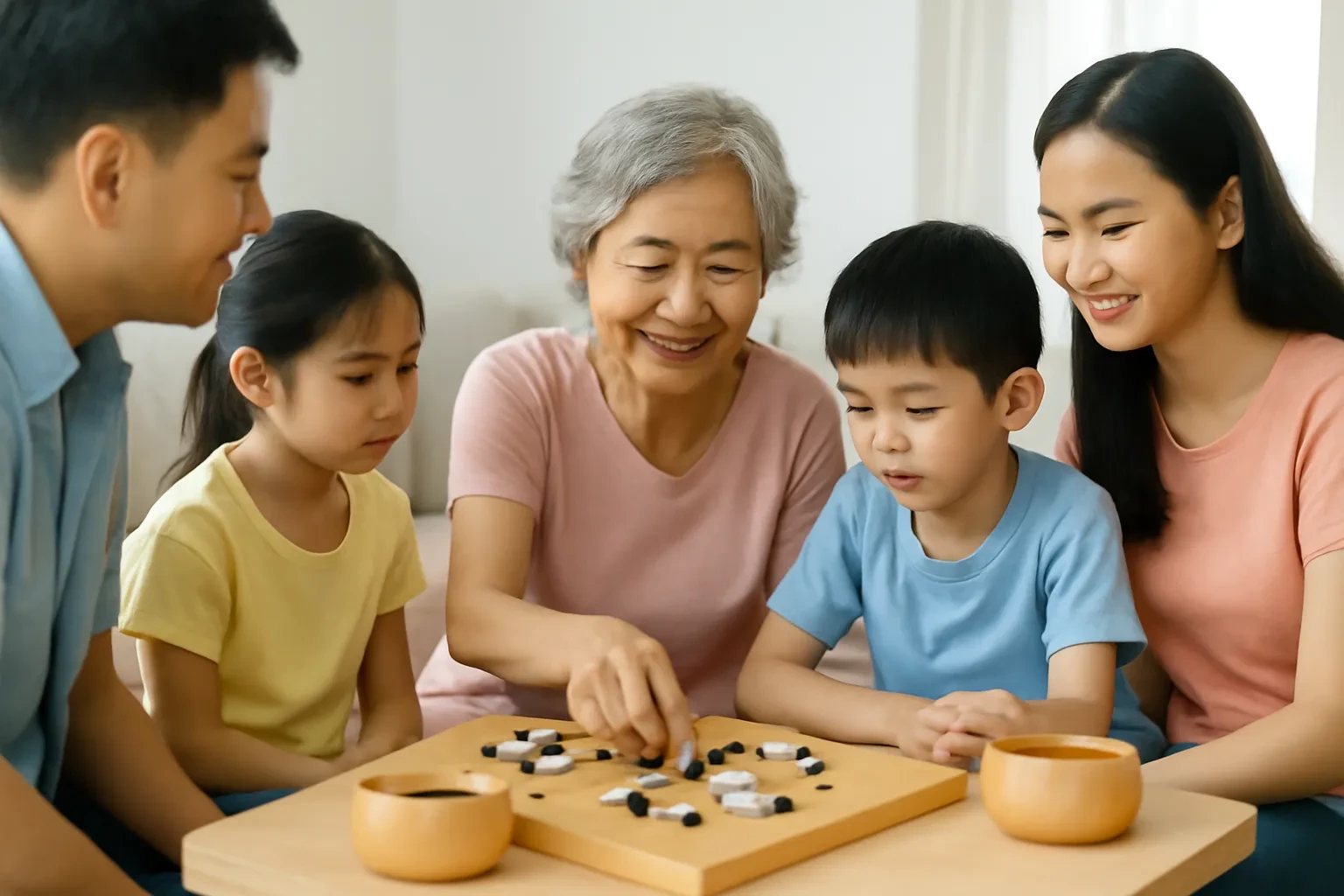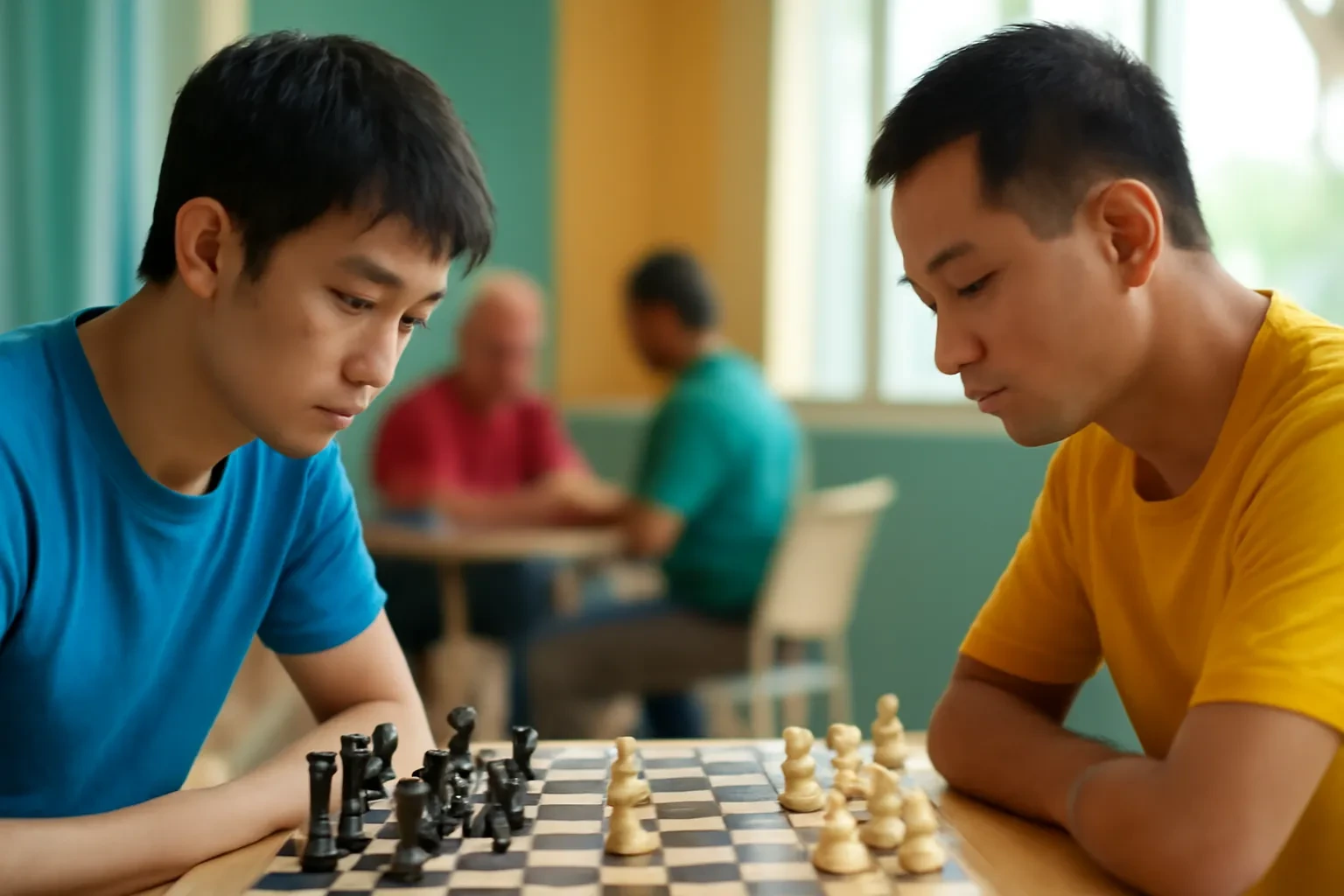
Go is often called a quiet game, and much of that quietness comes from its manners. Good etiquette makes games more enjoyable for both players and helps new players feel welcome. None of it is complicated, and most of it is simple courtesy. This article covers the common customs of face-to-face and online Go, with a few notes for playing in Vietnam, where board games are often played in public and noisy places.
Before the game
- Greet your opponent. A simple hello, a nod or a handshake is enough. In Vietnam, "chào anh", "chào chị" or "chào bạn" (depending on age) is friendly and polite.
- Agree on the rules and settings. Board size, time, komi and scoring. On this site, the rules are fixed: area scoring, komi 7.5, positional superko, no suicide, two passes end the game.
- Decide colours fairly. Online, the site assigns colours. Face to face, a common method is for one player to hide stones in a hand and the other to guess odd or even.
During the game
- Place stones cleanly. Put the stone on the point and take your hand away. Changing your mind after releasing a stone is not allowed in serious games.
- Do not hover. Holding a stone above the board for a long time, or rattling stones in the bowl, can distract your opponent.
- Stay quiet. Commenting on your opponent's moves, sighing loudly or explaining your plan during the game is impolite.
- Remove captured stones carefully. Take them off the board and keep them neatly, especially under territory scoring, where they count.
- Respect the clock. If you play with time limits, do not deliberately stall in a lost position.
Resigning
Resigning is a normal and respectful way to end a game when you are clearly lost. In Go, playing on for a long time in a hopeless position can be seen as disrespectful to your opponent's time. At the same time, beginners should not resign too early; many games are turned around by a single mistake.
A good rule: if you are behind by more than you could realistically recover, and you have no fight left to play, resign. Online on this site, resigning ends the game immediately.
The end of the game
When both players pass in a row, the game ends. Under the area scoring used on this site, the board is counted exactly as it stands, so both players should make sure that dead stones have been captured and neutral points filled before passing. Passing with work left to do is not bad manners, but it often causes surprises, so finish cleanly. The article on capturing dead stones before passing explains why.
After the game, thank your opponent. "Cảm ơn" is thank you in Vietnamese. Many players also like to replay the key moments together if both have time.
Reviewing together
Face to face, it is common to review the game with your opponent afterwards. Keep the tone friendly: point out the moves that mattered, ask questions rather than lecturing, and accept that your opponent may see things differently. Online on this site there is no chat, so review on your own by replaying the game from your account page.
Online manners
Online play removes some customs and adds others:
- Do not leave in the middle of a game. On this site, leaving before the first moves cancels the game, but leaving after that counts as resigning. If you need to stop, resign rather than disconnecting.
- Reconnect if you drop. If your connection fails, you have a short time to return; simply reopen the page and you are placed back into the game.
- Play at a steady pace. Letting your clock run out on purpose in a lost position wastes your opponent's time.
- No chat here. This site has no chat in games, deliberately, because many players are children. The only thing you exchange with a stranger is moves, which keeps things simple and safe.
Notes for playing in Vietnam
Board games in Vietnam are often social, especially cờ tướng in parks and cafés, where spectators may comment freely on the game. Go gatherings tend to be quieter, but if you play in a public place, expect some onlookers. A few practical notes:
- Spectators may talk. In xiangqi circles, onlookers commenting is common and not considered rude in casual games. If it bothers you, a smile and a polite request usually works.
- Age and politeness. Vietnamese uses different forms of address depending on age. If unsure, "bạn" (friend) is safe among peers; for older players, "anh" (older brother) or "chị" (older sister), or "chú" and "cô" for someone around your parents' age, are respectful.
- Offering drinks. In cafés, it is friendly to offer your opponent a drink, especially if they took the time to teach you.
Teaching new players
If you are the stronger player, a little kindness goes a long way. Play a smaller board, explain the rules patiently, and avoid crushing a beginner without comment. A friendly game where the beginner learns something is worth more to the Go community than an easy win.
Etiquette when watching others play
If you are a spectator rather than a player, a few extra customs apply. Stand or sit where you do not block the players' view or light. Do not comment on moves while the game is in progress, even quietly to a friend, and never point at the board. If you are watching a game between strong players, it is fine to ask questions after the game, but wait until the players invite discussion.
In Vietnam, spectators at cờ tướng tables in parks are often lively and talkative, and that style sometimes spills over into other games. At a Go gathering, it is kind to follow the quieter custom unless the players clearly welcome chatter. When in doubt, watch the players' faces: if they seem focused and serious, keep silent; if they are laughing and joking, a friendly word is usually welcome.
Frequently asked questions
Is it rude to resign?
No. Resigning a clearly lost game is normal and respectful. Just do not resign too early while you still have chances.
Can I take back a move?
Not in serious games. Once your hand leaves the stone, the move is final. Online, the move is final when you place it.
Why is there no chat on this site?
Because many players are children. Keeping games to moves only keeps interactions simple and safe.
What should I do if I disconnect online?
Reopen the page. You are placed back into the game automatically if you return within the time limit.
How do I thank my opponent in Vietnamese?
"Cảm ơn" means thank you. "Cảm ơn bạn" is a friendly way to say it to a peer.