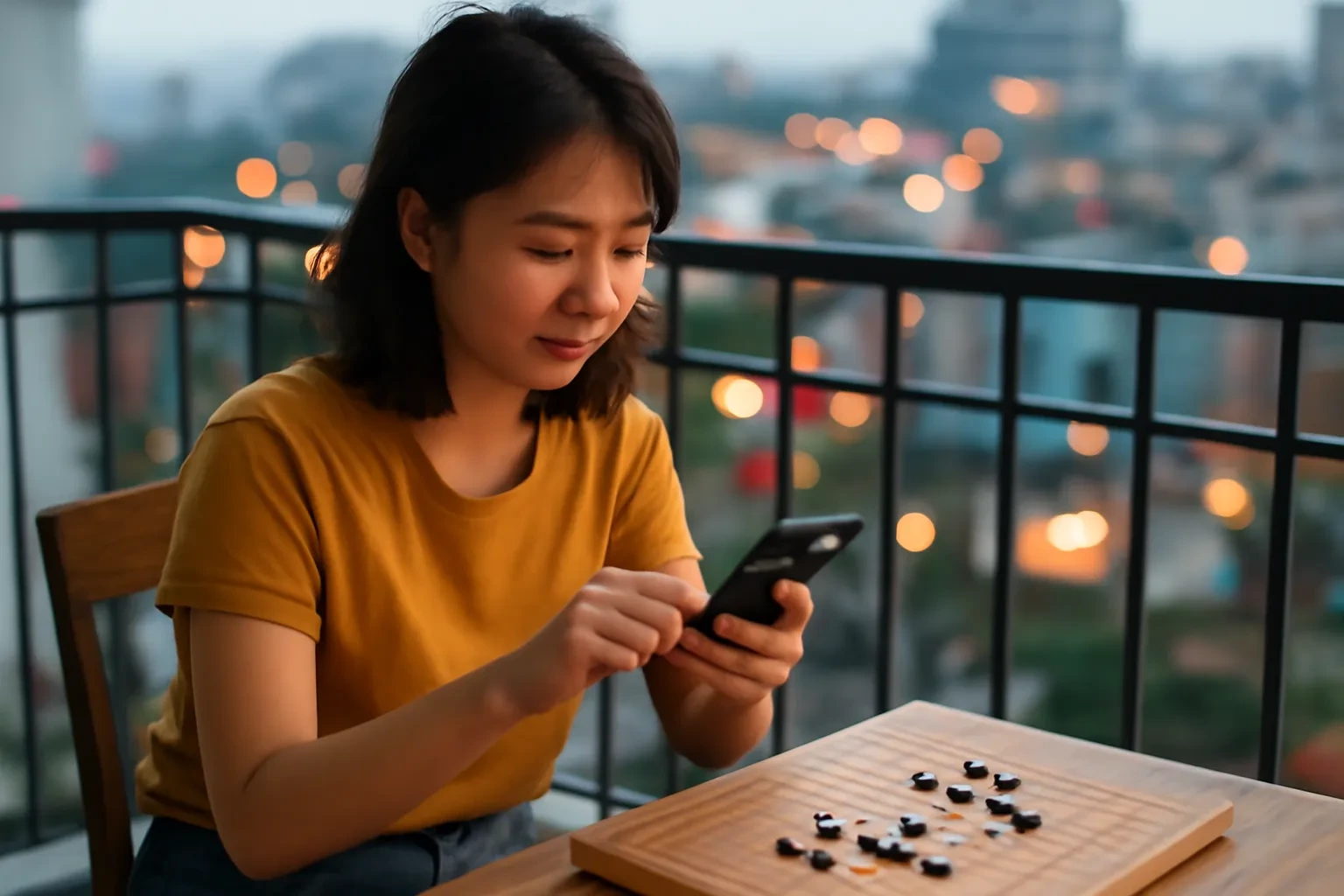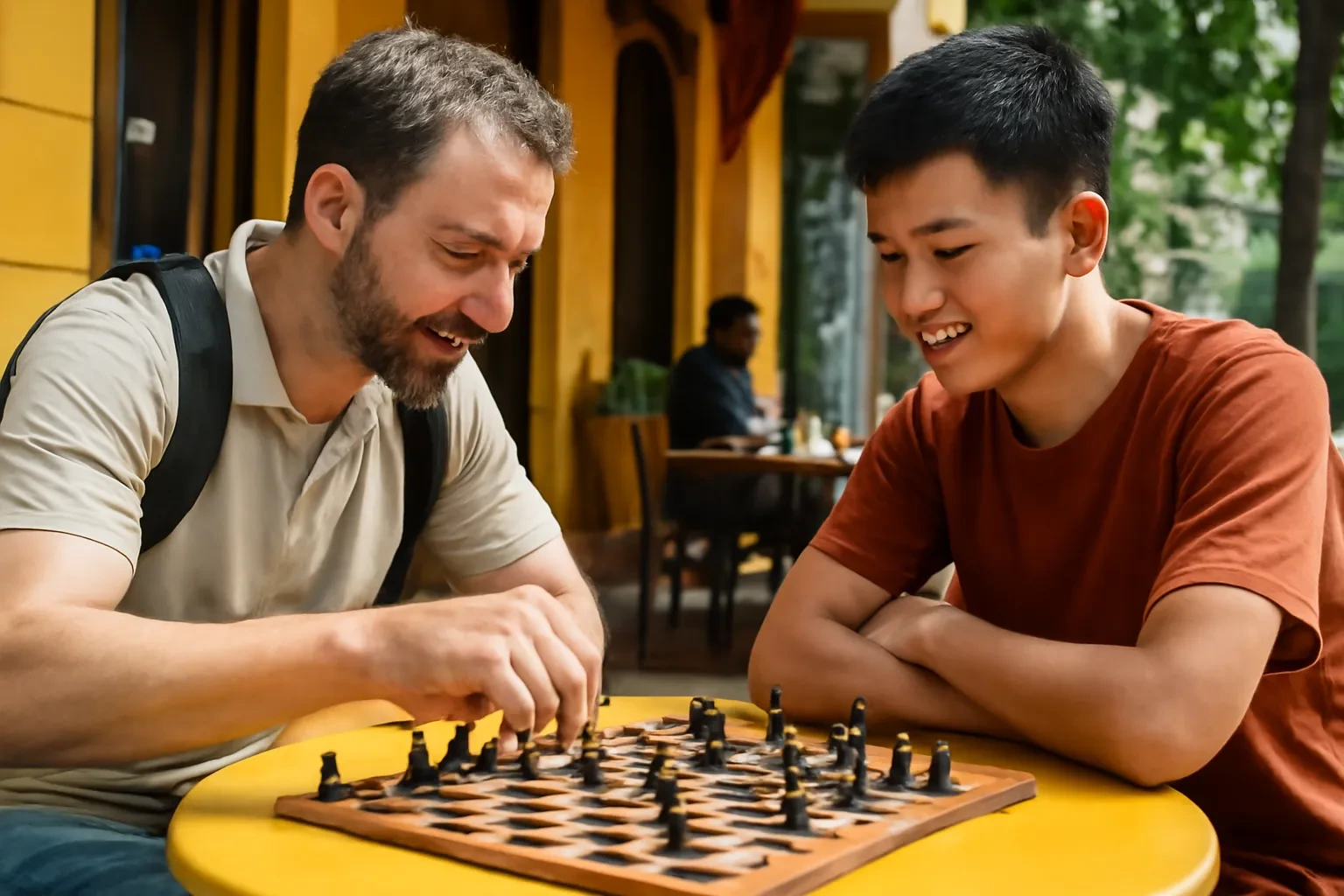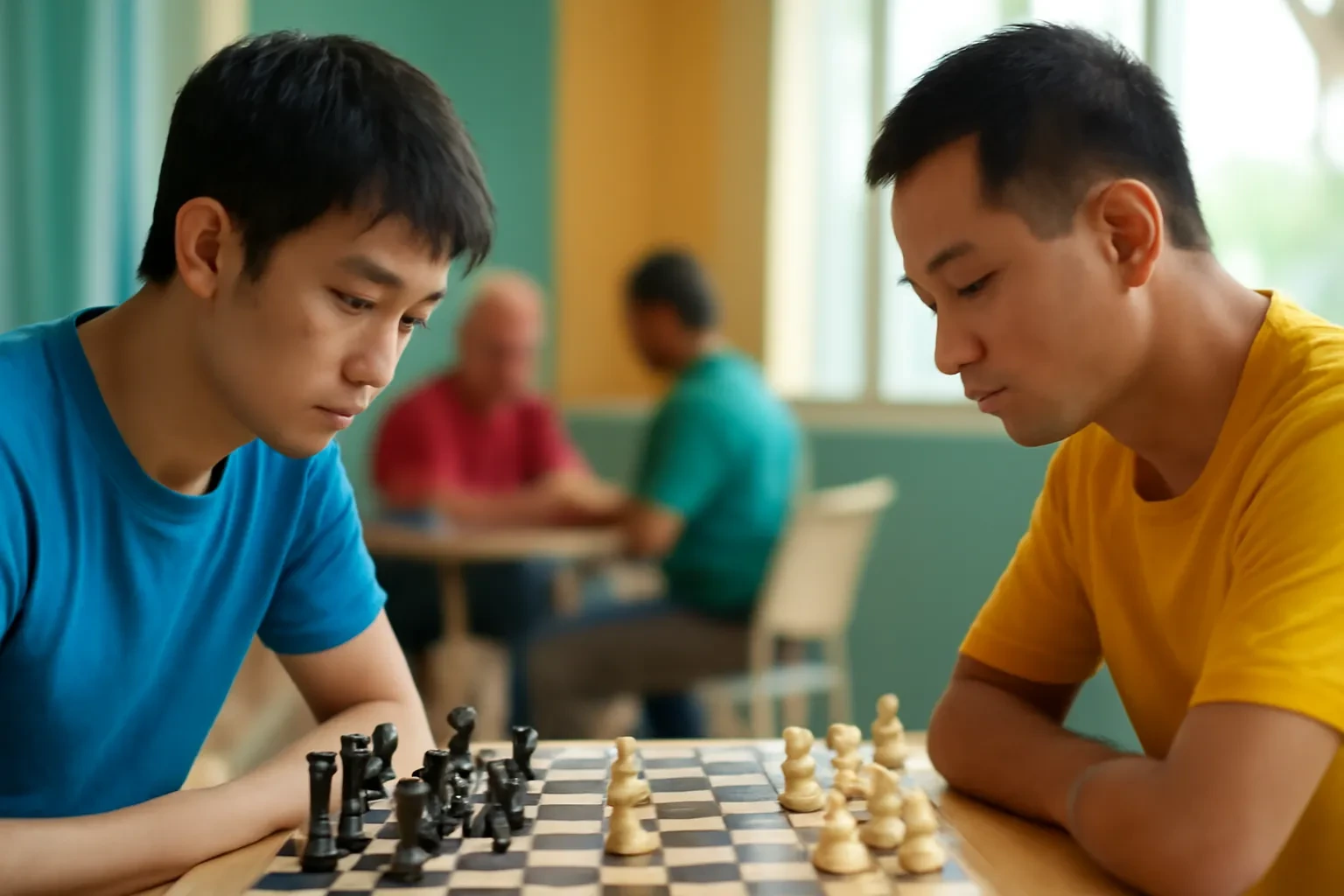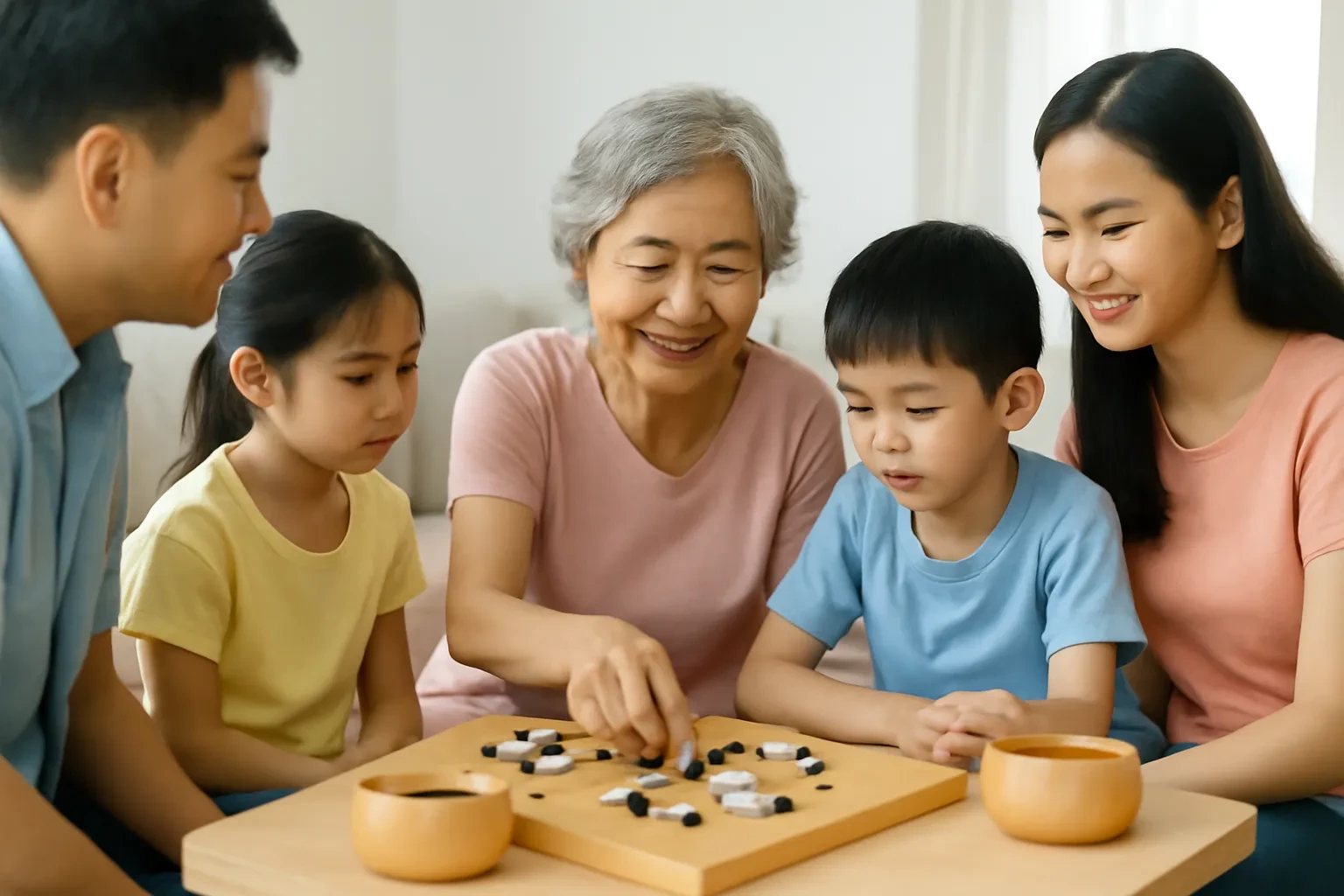
In many Vietnamese homes, board games are part of family life. Grandfathers teach grandchildren cờ tướng. Children play caro on the back pages of their notebooks. Chess sets come out at weekends. Go, or cờ vây, is less often part of that picture, but it fits naturally: the rules are short, the equipment is simple, and players of very different ages can enjoy the same game.
This article offers a gentle way to bring Go into family play, whether in Vietnam or anywhere else.
Why Go works for families
- The rules are few. Place a stone, capture stones with no liberties, do not repeat the board. A child can learn the basics in a few minutes.
- Every stone is equal. There are no pieces to memorise, so young children are not overwhelmed.
- Board size is flexible. A 9×9 board makes a short game; the same rules scale to 13×13 and 19×19 as players grow.
- Handicaps are easy. A stronger player can give a weaker player extra stones at the start, so parents and children can play close games.
Start with the capture game
The easiest first step is not full Go but a simplified version often called the capture game: the first player to capture a stone, or a set number of stones, wins. It teaches the most important idea of Go, liberties, in a way children enjoy immediately.
How to play:
- Use a small board, 9×9 or even smaller if you draw one on paper.
- Players take turns placing one stone.
- A stone or group with no empty points next to it is captured.
- The first to capture wins.
After a few games, children start protecting their stones and threatening the opponent's, which is exactly the skill full Go needs.
Moving to full Go
When the capture game becomes easy, introduce the real goal: surrounding more area than your opponent. On a 9×9 board, a game takes ten to fifteen minutes. Explain:
- Games end when both players pass.
- The winner is the one who surrounds more of the board, counting their stones and the empty points only they surround.
- On this site, White receives 7.5 points of komi for moving second.
For the first family games, keep counting relaxed. Point at each area and ask "whose is this?" Children often enjoy the counting itself.
Keep it light
A few habits help keep Go fun at home:
- No scores or rankings for children. Celebrate interesting moves and good captures, not points or wins.
- Short sessions. One or two small games are better than an hour-long session that ends in tired tears.
- Let children win sometimes, fairly. Use handicap stones rather than playing badly on purpose; children notice.
- Talk about the game afterwards. "Which of your moves did you like?" is a better question than "why did you lose?"
Mixing Go with other family games
Families that already play cờ tướng or caro can use them as a bridge:
- From caro: caro players already understand placing marks on a grid and blocking the opponent. Go feels familiar, with the new idea of capture.
- From cờ tướng: xiangqi players bring calculation skills. Go adds patience and whole-board thinking; see from xiangqi to Go.
- Alternate games. Some families choose a different game each evening. Variety keeps interest high.
Playing apart
When family members live in different cities or countries, as many Vietnamese families do, online Go keeps the habit alive. On this site you can:
- Create an invite link on the online page and send it to a relative. When they open it, the game starts.
- Play without accounts, or sign in on the account page to save your games and replay them together later over a video call.
Games have no chat, by design, which also makes online play safer for children. Talk through the family's usual messaging app instead.
Practising between family games
Children who enjoy Go can practise alone against the computer on the home page, on 9×9 or 13×13, choosing among four levels. The lowest level is gentle and makes mistakes that children can learn to punish. As they improve, they can move up a level at their own pace, without any rating or ranking involved.
Equipment
You do not need an expensive set. For family play:
- A small 9×9 board is enough to start. You can draw one on paper or cardboard.
- Stones can be any two colours of small counters or coins.
- Keep the board and stones somewhere visible; games happen more often when the set is easy to reach.
A small first position
Showing a small position like this and asking "how many empty points does the white stone have?" is a lovely first lesson. It turns the abstract word "liberty" into something a child can point at.
Ideas for a family Go evening
A little structure makes family Go evenings more fun. Try a short "tournament" where everyone plays everyone on a 9×9 board, with handicap stones adjusted so games are close. Keep the focus on interesting moments rather than results: at the end, each person shows one move they were proud of. Younger children can play the capture game on a smaller board while older players play full games beside them.
Another popular idea is team Go, where two players share one colour and alternate moves without discussing them. It produces funny surprises and teaches children to read their partner's plan. Grandparents who know cờ tướng can join as teammates even before they learn Go well, because the teamwork itself becomes the game. Whatever you choose, end the evening while everyone still wants to play more; that is the best guarantee that the board comes out again next week.
Families sometimes worry that Go will take over evenings or cause arguments. In practice, the small board keeps games short, and handicap stones keep them balanced, so disagreements are rare. If a child becomes upset after a loss, suggest a capture-game rematch on a tiny board; the quick, simple format usually restores the mood in a minute or two.
Frequently asked questions
What age can children start Go?
Many children can play the capture game from about five or six, when they can take turns and count a few points. There is no fixed rule; follow the child's interest.
Should I let my child win?
Use handicap stones instead of playing badly on purpose. Close, fair games are more rewarding.
Is 19×19 too big for children?
For beginners, yes. Start with 9×9, then 13×13. The full board can come later.
Can we play online as a family?
Yes. Send an invite link from the online page. No account is needed to play.
Does this site show ratings or rankings?
No. There are no public ratings or leaderboards, which keeps play relaxed for children.