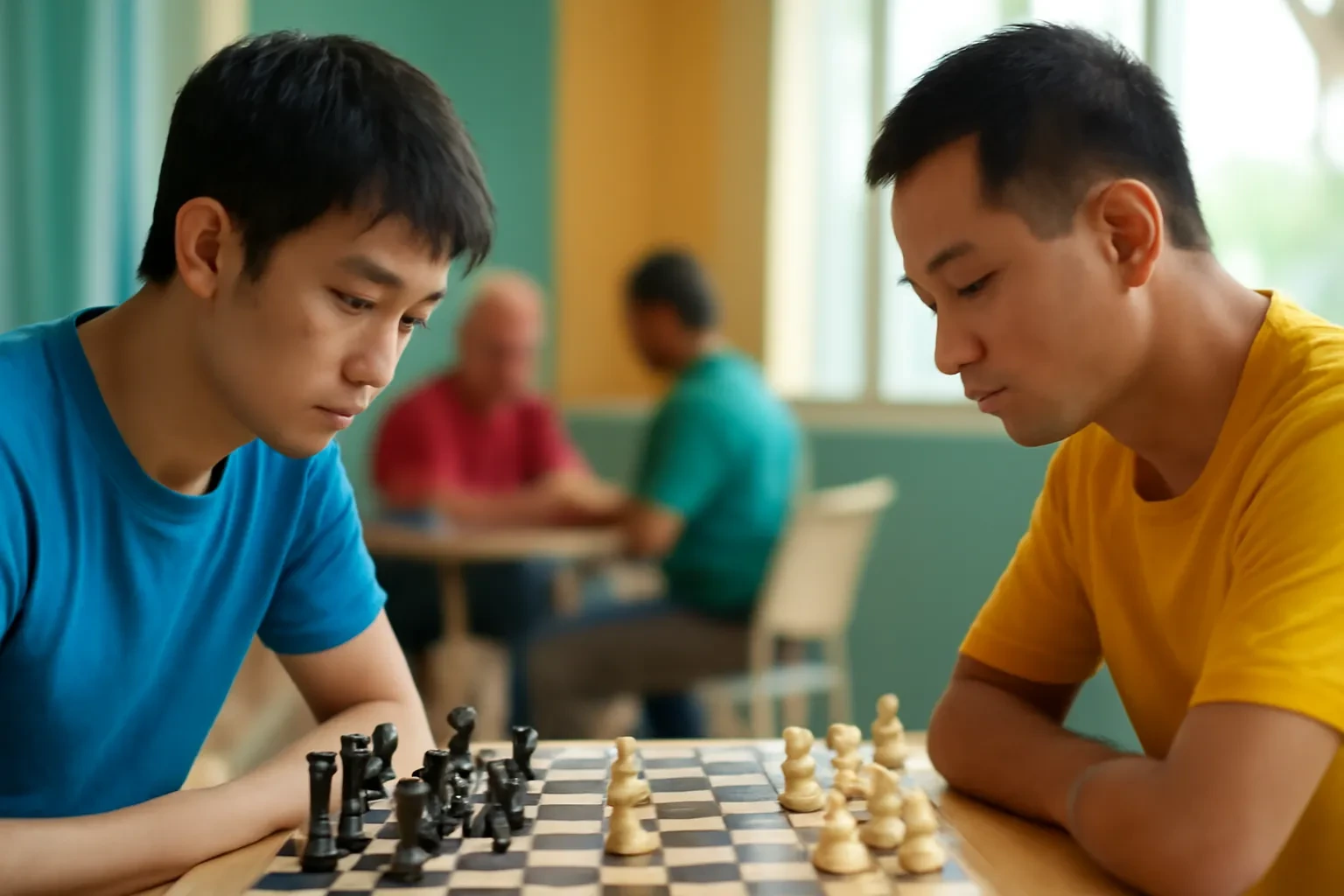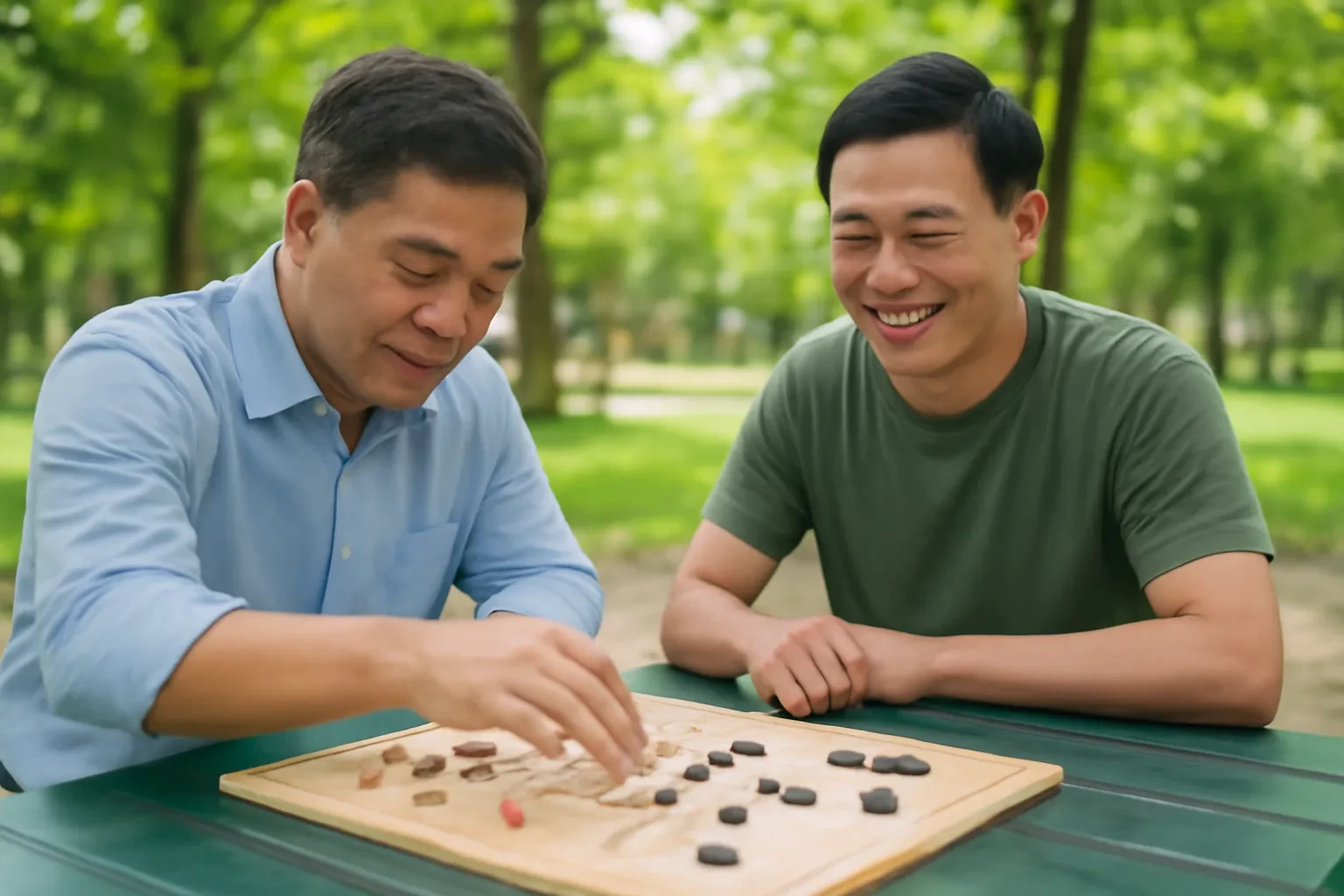
In Vietnam, most people who play board games learn cờ tướng (xiangqi) first. It is everywhere: in parks, on pavements, at family gatherings. So when a Vietnamese player discovers cờ vây (Go), they usually arrive with years of xiangqi experience. The same is true for many players elsewhere who come to Go from xiangqi or chess.
That experience is a real asset, but it also brings habits that do not fit Go. This article looks at what carries over, what needs to change, and how to make the first month of Go enjoyable instead of confusing.
What carries over
Reading ahead. Xiangqi trains you to calculate sequences: if I move here, they capture there, then I check. Go needs exactly the same skill for fights, captures and life and death. Xiangqi players often read Go tactics surprisingly well from the start.
Initiative. In xiangqi, keeping the opponent busy answering threats is a central idea. Go has the same concept, called sente in Japanese and tiên thủ in Vietnamese, the same word xiangqi players already use for moving first. The idea of forcing moves that keep the initiative transfers directly.
Patience in long games. Serious xiangqi games can be long and grinding. Go games are long too, and the ability to stay focused through a quiet phase is valuable.
Pattern memory. Xiangqi players remember mating patterns and opening lines. Go has its own patterns, in shapes, joseki and life-and-death, and a trained pattern memory learns them quickly.
What feels strange
No pieces with different powers. Every Go stone is the same. There is no chariot or cannon, no strong piece to protect. The value of a stone comes entirely from where it is and what it is next to.
No king. Xiangqi is about the general. Go has no single target; the game is about area. Newer players from xiangqi sometimes look for a decisive attack that wins at once, and it rarely exists.
Stones do not move. Once placed, a stone stays until it is captured. Planning in Go is about building, not manoeuvring.
The whole board matters. Xiangqi action often concentrates in one area. In Go, several fights and territories develop at the same time, and the biggest move is often far from the last move played.
Winning by a little is normal. In xiangqi, a game ends with checkmate or a clear result. In Go, winning by a few points is completely normal, and games are counted at the end.
Habits to unlearn
- Capturing everything. In xiangqi, winning material is usually good. In Go, capturing a few stones while your opponent builds a large area can lose the game. Count area, not captures.
- Chasing the opponent's stones. A xiangqi player instinctively attacks. In Go, attacking a group that can live easily often just helps it. Attack to gain something, not to kill at any cost; see attacking weak groups.
- Answering every threat. In xiangqi, ignoring a threat to your general loses immediately. In Go, ignoring a small threat to play a bigger move elsewhere is often correct.
- Focusing on one area. Before each move, look at the whole board, not only the fight in front of you.
A first-month plan for xiangqi players
Week 1: rules and captures on 9×9. Learn liberties, capture, ko, and why suicide is not allowed. Play many short 9×9 games against the computer on the home page. Notice how quickly the game ends and how it is counted.
Week 2: life and death basics. Learn why a group needs two eyes to live. Your xiangqi reading skills will shine here. The life-and-death material on this site and simple positions from your own games are enough.
Week 3: territory and counting. Start counting your games. On this site, scoring is by area with komi 7.5: your stones plus the empty points only you surround. Learn to capture dead stones before passing, because the site counts the board as it stands. See area scoring explained.
Week 4: move to 13×13. The bigger board introduces real openings and whole-board strategy. Keep playing the computer and start playing people on the online page.
Throughout, sign in on the account page so your games are saved. Replaying a lost game move by move is one of the fastest ways to improve, exactly as in xiangqi.
Why keep playing both
Many players keep both games. Xiangqi sharpens concrete calculation; Go builds a broader sense of balance and whole-board judgement. Playing both can make each better: a xiangqi player who has learned Go's patience often plays calmer, stronger middle games, and a Go player with xiangqi's tactical sharpness reads fights better.
A small illustration
Positions like this one are typical of the early Go game: no immediate tactics, just a quiet contest for space. Learning to be comfortable with that quietness is the biggest adjustment for most xiangqi players.
What xiangqi players often enjoy most about Go
Many players who come to Go from cờ tướng describe the same pleasant surprise: the freedom of the empty board. In xiangqi, the opening position is fixed and the first moves follow well-known patterns. In Go, the board starts empty, and from the very first stone there are many reasonable choices. Some players find this overwhelming at first; most soon find it exciting.
Another common delight is that mistakes are rarely instantly fatal. In xiangqi, missing a single tactic can end the game at once. In Go, losing a group hurts, but a game can often be recovered by gaining elsewhere. This makes Go feel forgiving for learners and rewards resilience. Players who used to resign quickly in xiangqi often learn, through Go, to keep fighting calmly when things go wrong, and that habit carries back to their xiangqi games as well.
Frequently asked questions
Is Go harder than xiangqi?
It is different rather than harder. The rules are simpler, but the strategy is broad. Xiangqi players usually pick up the tactics quickly and need more time for whole-board judgement.
Will learning Go hurt my xiangqi?
Most players find the opposite: the patience and whole-board thinking from Go help their xiangqi middle games.
What board size should I start with?
9×9. Games are short and the rules become clear quickly. Move to 13×13 after a few weeks.
Why did I lose after capturing more stones?
Because Go is decided by area, not by captures. Your opponent probably built more territory while you captured.
What rules does this site use?
Area scoring, komi 7.5, positional superko, no suicide. Two passes end the game.