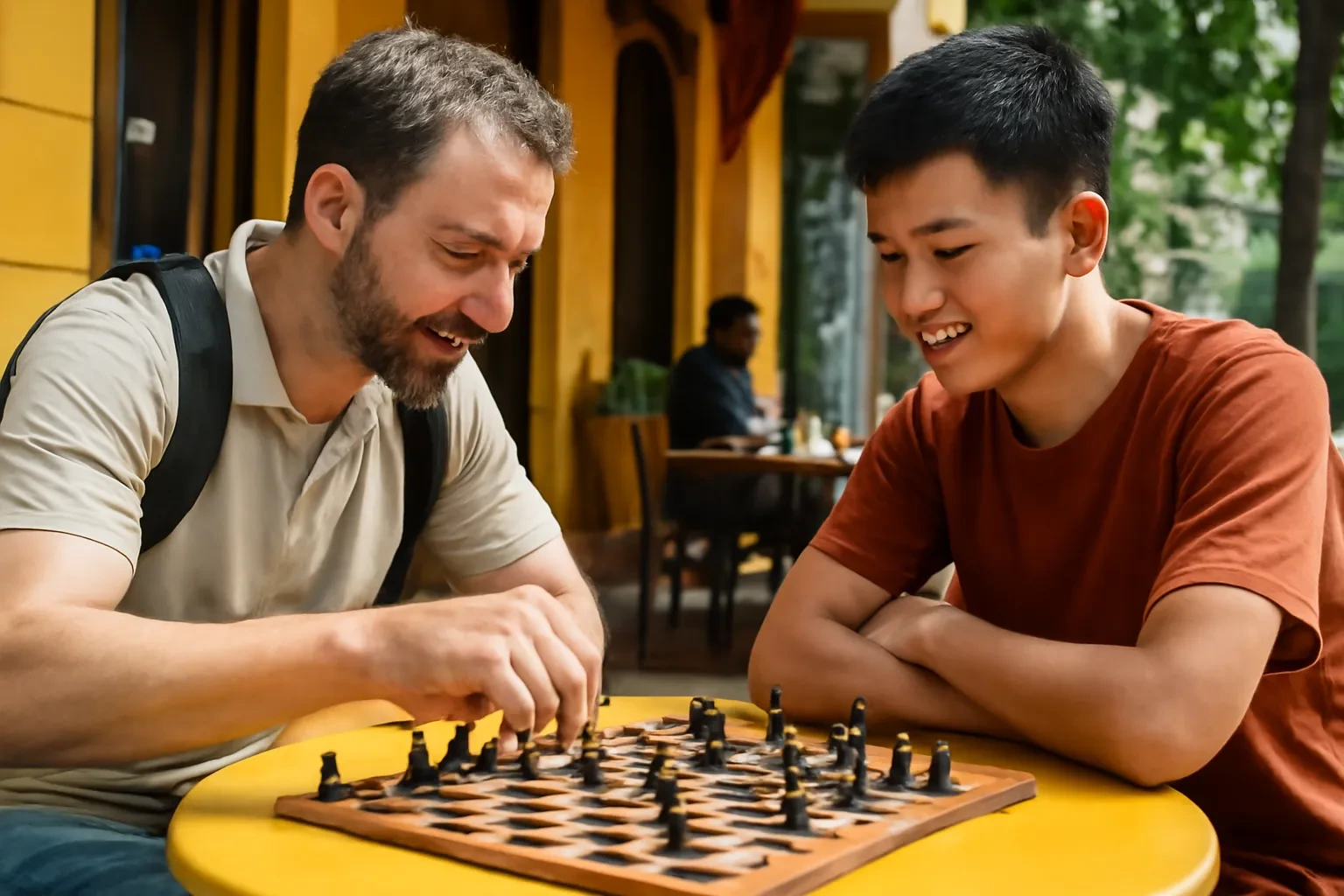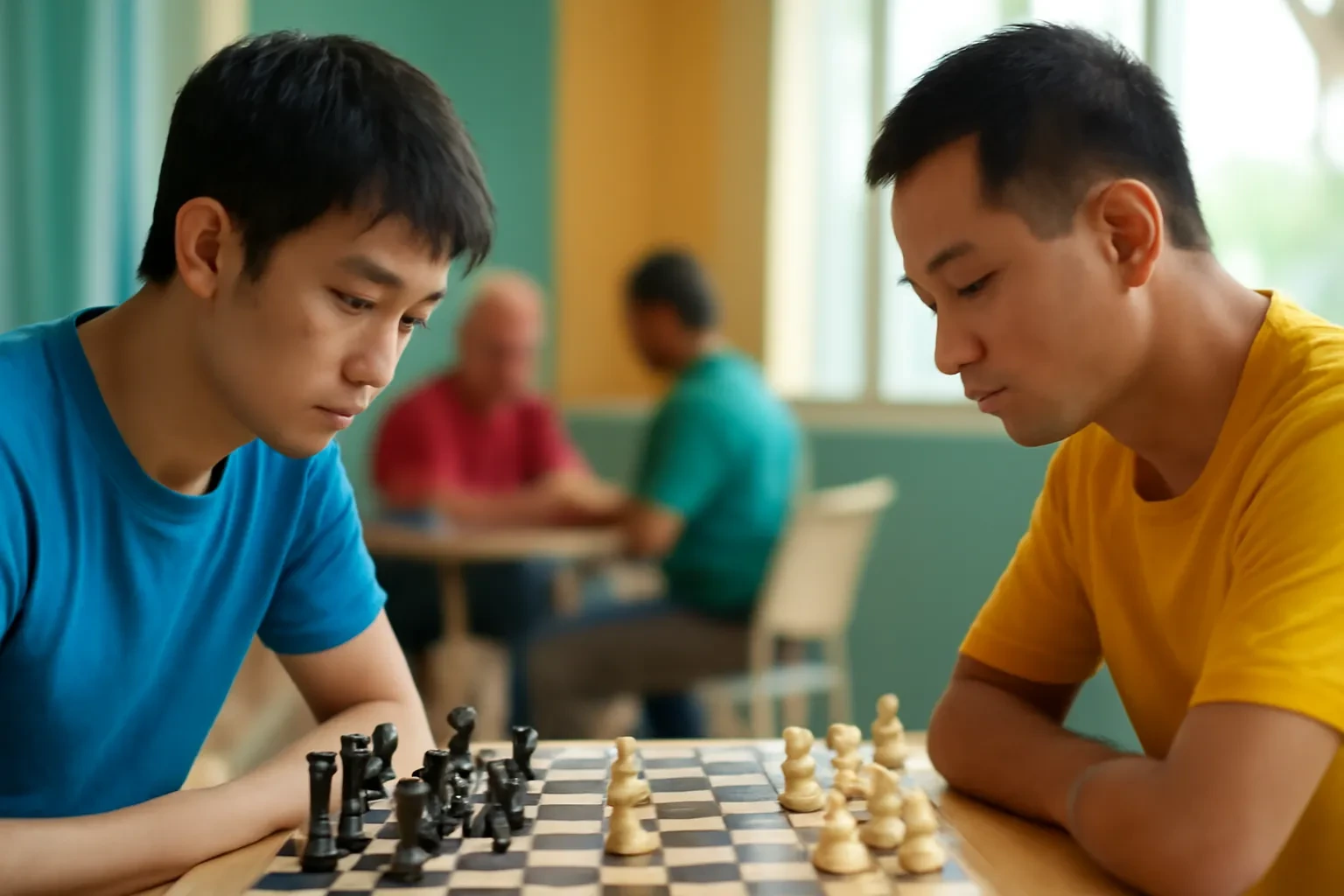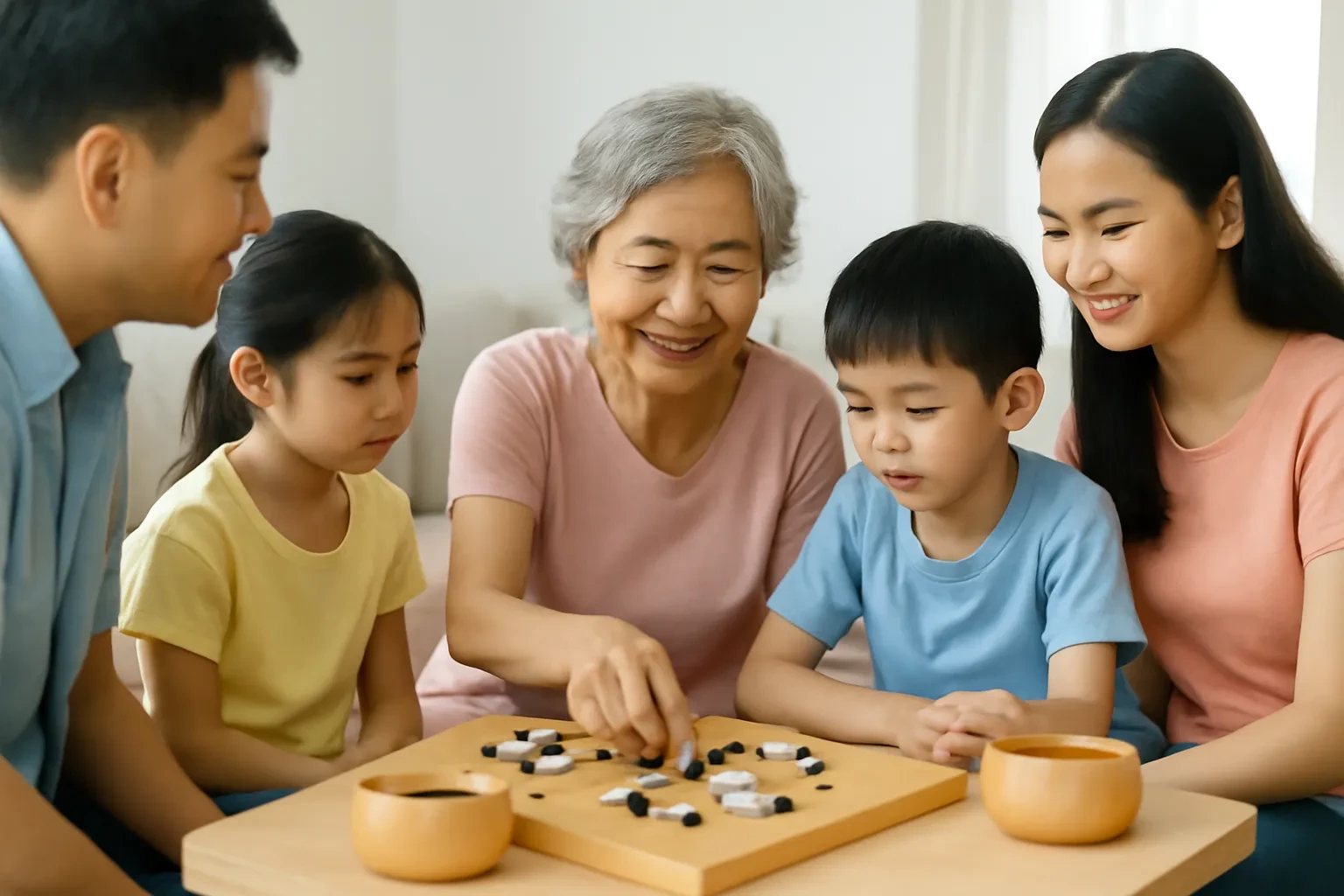
Go has always been a game you can play with someone far away. Long before the internet, players sent moves by letter. Today, a link and a phone are enough. If you have friends in Vietnam, are travelling there, or simply want to play with Vietnamese players, online Go is the easiest way to get a game. This article covers the practical side: time zones, devices, board sizes and how to set up a game on this site.
Time zones
Vietnam uses a single time zone, UTC+7, all year round, with no daylight saving time. That makes planning simple:
- Vietnam is usually about 6 hours ahead of central Europe in winter and 5 hours ahead in summer.
- Vietnam is about 12 hours ahead of the east coast of North America in winter, and 11 in summer.
- Vietnam is about 3 to 4 hours behind eastern Australia, depending on the season there.
Evenings in Vietnam, roughly 19:00 to 22:00, are a popular time for casual games. That corresponds to early afternoon in Europe and early morning in North America. If you are arranging a game with a friend, agree on a time in both time zones to avoid confusion.
Playing on a phone
Many Vietnamese players do most of their internet use on phones, and Go works well on a phone if you choose the right settings:
- Board size. A 9×9 or 13×13 board fits comfortably on a phone screen. A 19×19 board is playable but the points are small; tap carefully.
- Portrait mode. Holding the phone upright gives the board the full width of the screen.
- Stable connection. If you are on mobile data or café Wi-Fi, a connection can drop. On this site, if you disconnect during a game, simply reopen the page; you are placed back into the game automatically if you return within the time limit.
- Save battery. A long 19×19 game on a phone can take a while; start with enough charge.
Choosing a board size
- 9×9 games are short, often under fifteen minutes. They are ideal for quick games during a break and for friends who are new to Go.
- 13×13 gives a real opening and middle game while staying fairly short. It is a good default for friends of similar strength.
- 19×19 is the full game. It takes longer and needs a calm evening.
On this site you can play the computer on 9×9 and 13×13, and people on 9×9, 13×13 and 19×19.
Inviting a friend with a link
The easiest way to play a specific person is an invite link:
- Open the online page.
- Choose invite a friend, pick the board size, time control and your colour, or let the site choose at random.
- Create the link and send it through whatever messaging app you both use.
- When your friend opens the link, the game starts.
No account is needed to play. If you want your games saved so you can replay them together later, sign in on the account page with your email.
Finding a random opponent
If you just want a game, choose find an opponent on the online page, pick a board size and time control, and wait to be paired with someone looking for the same settings. Some combinations are busier than others; if you wait too long, try a different time control or invite a friend instead.
Time controls and fairness
Choose a time control that suits both players. If your friend is on a phone and on the move, a relaxed setting or no clock is kinder. If you both want a sharp, focused game, a shorter clock adds excitement. Whatever you choose, avoid letting your clock run out on purpose in a lost position; resign instead.
No chat, by design
Games on this site have no chat. This is deliberate: many players are children, and keeping interaction to moves only is safer. If you are playing a friend, talk through your usual messaging app. If you are playing a stranger, the board is your conversation.
The rules used here
So that there are no surprises, here are the rules on this site:
- Area scoring, with komi 7.5 for White.
- Positional superko: you cannot recreate an earlier whole-board position.
- No suicide.
- Two consecutive passes end the game, and the board is counted as it stands. Capture dead stones before passing.
If your friend learned Go with territory scoring, share the article on area scoring explained before your first game.
Playing across languages
If your friend speaks Vietnamese and you do not, a few words help: cờ vây is Go, cảm ơn is thank you, and chơi lại means play again. Our article on Vietnamese Go words lists more.
Making remote games feel social
Online games can feel a little impersonal, especially without chat. A few simple habits make them warmer when you play friends or family abroad. Agree on a regular time each week, so the game becomes a small ritual. Have a short voice or video call running in the background if both of you like it, and talk about the game afterwards rather than during it.
Saving games helps too. If both players sign in on the account page, each of you can replay the game later and pick one moment to discuss next time. Some friends keep a running series, taking turns choosing the board size or colour. Others use a slow time control and play a single long game over an evening while doing other things. Go is flexible enough for all of these styles, and the distance between Vietnam and wherever you are soon stops mattering once the stones start going down.
Finally, remember that a friendly game matters more than the result. If your friend is new to Go, start on 9×9, offer to play without a clock, and suggest they try a few games against the computer on the home page between your sessions. Small steps keep the habit enjoyable for both of you.
Frequently asked questions
What time zone is Vietnam in?
UTC+7, all year round, with no daylight saving time.
Can I play Go on my phone on this site?
Yes. 9×9 and 13×13 are the most comfortable sizes on a phone.
Do I need an account to play a friend?
No. An invite link is enough. Sign in only if you want your games saved.
What happens if my connection drops?
Reopen the page. You return to the game automatically if you come back within the time limit.
Is there chat during games?
No. It is deliberate, for the safety of younger players. Use your own messaging app to talk to friends.