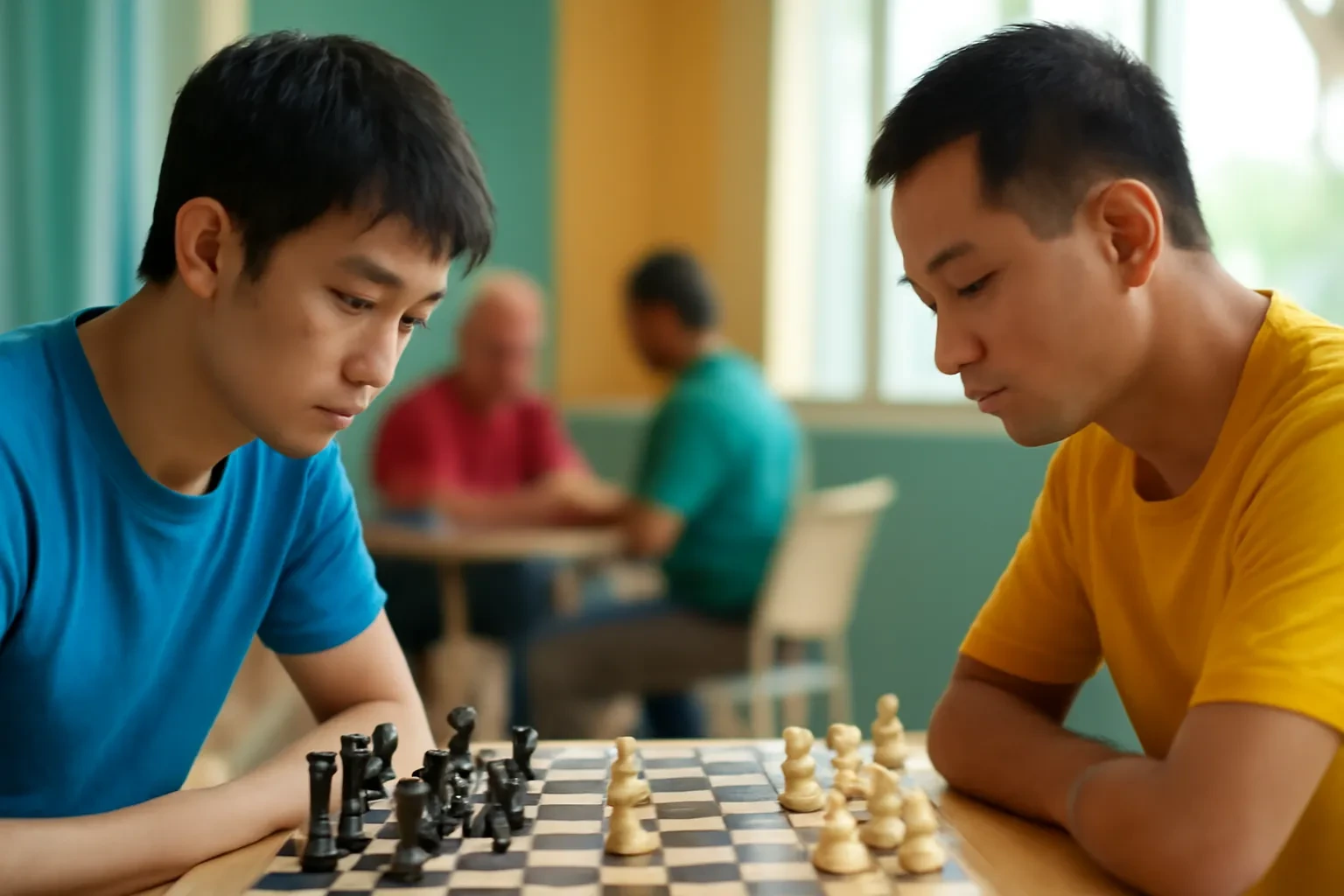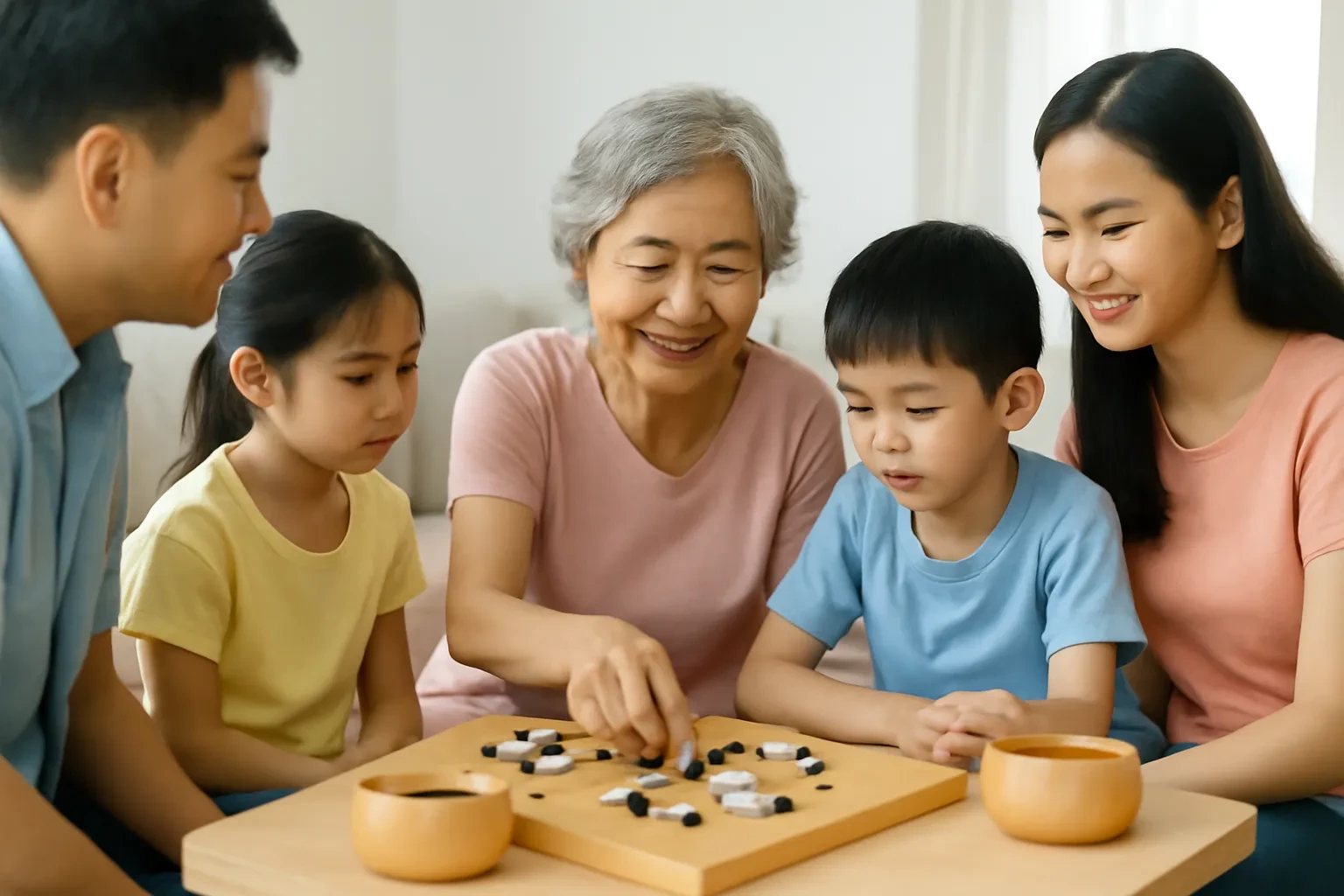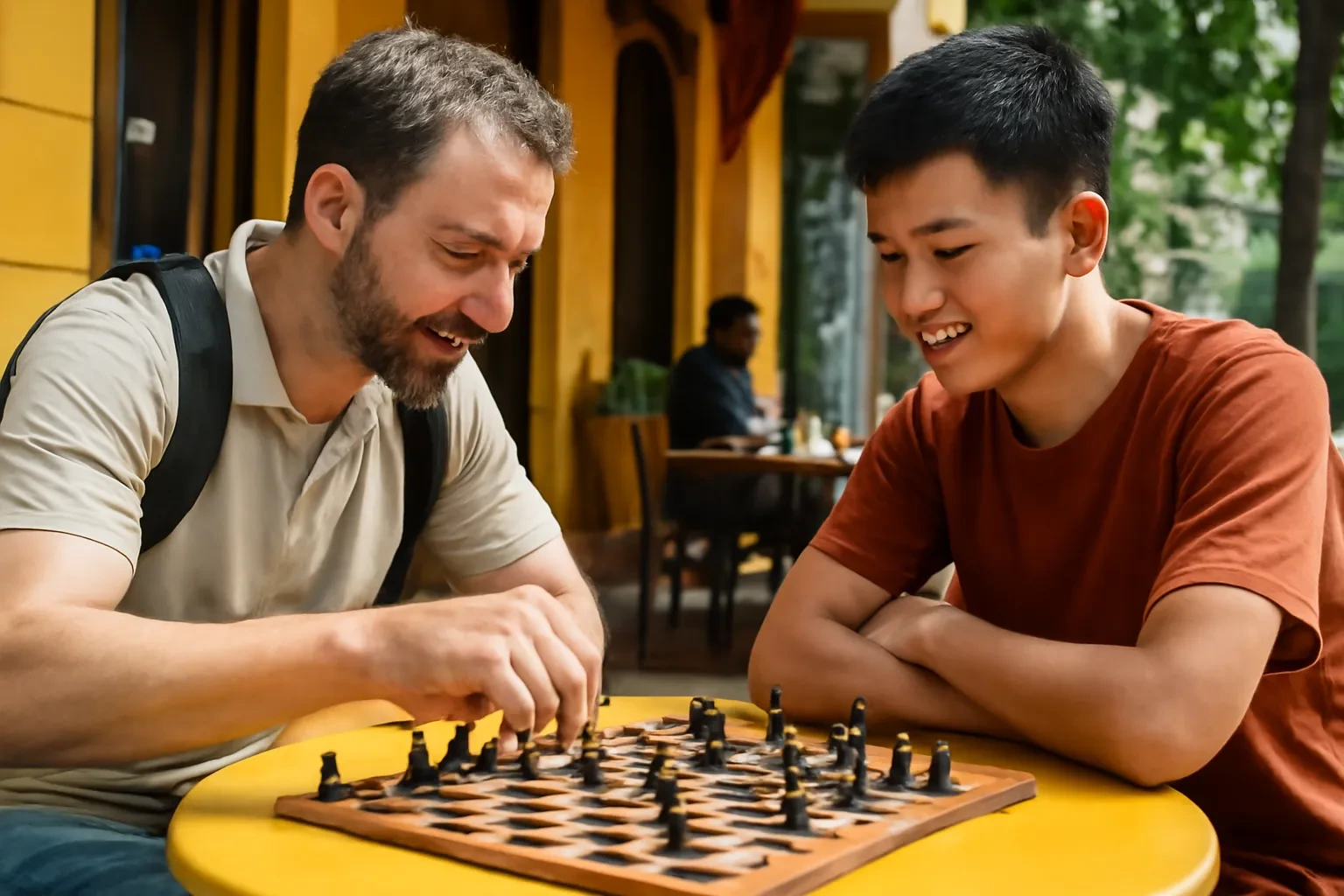
If you walk through a park in Hanoi or Ho Chi Minh City in the morning, you will almost certainly see board games. Most of them will be cờ tướng, the Vietnamese name for xiangqi. You may see chess too, and in schools and on notebook paper you will see children playing caro. Go, called cờ vây in Vietnamese, is less common on the street, but it has a real and growing community of learners, and the name itself says a lot about the game.
This article introduces Go as it is known in Vietnam: the name, the vocabulary, its place among other board games, and practical ways to play if you are visiting or learning.
What "cờ vây" means
In Vietnamese, cờ means a board game, the same word used in cờ tướng and cờ vua. Vây means to surround or encircle. So cờ vây is, literally, the surrounding game. That is a very accurate description: the whole game is about surrounding territory and surrounding your opponent's stones.
The name matches the Chinese name of the game, wéiqí, whose first character also means to surround. In Sino-Vietnamese reading, that name is pronounced vi kỳ. You will see vi kỳ in older texts and in some formal contexts, but in everyday speech, cờ vây is the normal word.
Go among Vietnamese board games
Vietnam has a rich board-game culture, and the games occupy different places in daily life:
- Cờ tướng (xiangqi) is by far the most visible. It is played in parks, on pavements, in cafés and at family gatherings, often with spectators commenting on every move.
- Cờ vua (international chess) has a strong following, especially among schoolchildren and competitive players.
- Caro, a five-in-a-row game on grid paper, is the game many Vietnamese people remember from school.
- Cờ vây (Go) has a smaller but dedicated community, often of students and people who discovered it through books, online play or friends.
For someone who already plays chess or xiangqi, Go feels very different. There are no pieces with different moves, no king to capture; there are only stones, placed on the intersections, and the goal is area rather than checkmate. Many players who try it after xiangqi find that the calculation skills carry over, while the strategic thinking is new.
Common Vietnamese Go vocabulary
If you learn Go with Vietnamese players, a few words come up constantly. Several of them are Sino-Vietnamese forms of the same terms used in Chinese and Japanese Go writing.
- Khí: liberty. A group with few khí is in danger.
- Mắt: eye. A group needs two mắt to live.
- Ăn quân or bắt quân: to capture stones.
- Cướp: ko, the situation where stones can be captured back and forth.
- Định thức: joseki, standard corner sequences.
- Bố cục: the opening, or fuseki.
- Quan tử: the endgame, or yose.
- Tiên thủ and hậu thủ: sente and gote, keeping or giving away the initiative.
The article on Vietnamese Go words goes through these in more detail.
Learning Go in Vietnam
Go in Vietnam is learned through several routes, and the exact options depend on the city and change over time. Common routes include:
- Friends and family, especially someone who learned from books or online.
- Student groups at universities, where board games are a common hobby.
- Online play, which removes the need to find a local opponent.
If you are visiting and want a game, the simplest approach is to ask at cafés known for board games or to look for local Go groups online before you travel. We do not list specific clubs or venues here, because they change and we cannot vouch for them.
Why Go is a good match for Vietnamese players of other games
Players who already enjoy cờ tướng often appreciate three things about Go:
- Reading ahead. The calculation of captures and fights in Go uses the same muscle as calculating tactics in xiangqi.
- Patience and whole-board thinking. Go rewards looking at the entire board, which complements the concentrated tactics of xiangqi.
- No draws in most games. With komi including half a point, every game has a winner, which many competitive players enjoy.
The article on from xiangqi to Go explores the transition in detail.
Playing on this site
This site is the English half of a pair: its Vietnamese partner teaches and plays Go in Vietnamese. Here you can:
- Play the computer on the home page on 9×9 or 13×13 boards, at four levels.
- Play real people on the online page on 9×9, 13×13 or 19×19, by finding an opponent or inviting a friend with a link.
- Sign in on the account page with your email to save and replay your games.
The rules used here are area scoring with komi 7.5, positional superko and no suicide. Two consecutive passes end the game, so capture dead stones before passing.
A note for travellers
If you visit Vietnam and want to play board games with locals, you will most easily find a game of cờ tướng. Learning a little xiangqi is a friendly way to join in, and many players are happy to teach. If you prefer Go, bring a small board or play online; mentioning "cờ vây" to board-game players is a good conversation starter, even if the person you ask plays cờ tướng instead.
What to expect if you join a local game
If you find Go players in Vietnam, expect a welcoming but informal atmosphere. Games between friends often come with a little conversation, snacks or drinks, and friendly review afterwards. Rules may follow whatever the group is used to, which could be territory or area scoring; it is polite to ask before the game starts. Handicap stones are commonly used when strengths differ, so do not hesitate to take or give them.
Language is rarely a barrier. Go is played with the same board and the same stones everywhere, and a few words such as cờ vây, khí and cảm ơn go a long way. If you are a stronger player, many locals will appreciate a teaching game where you explain a few key moments. If you are a beginner, you may well find someone happy to show you the basics, especially among students and younger players who learned online.
Frequently asked questions
What is Go called in Vietnamese?
Cờ vây, meaning the surrounding game. The Sino-Vietnamese name is vi kỳ.
Is Go popular in Vietnam?
It has a dedicated community, but cờ tướng (xiangqi) and chess are much more common in daily life.
Are Vietnamese Go terms similar to Chinese and Japanese ones?
Many are Sino-Vietnamese forms of the same terms, such as định thức for joseki and quan tử for endgame.
Where can I play Go in Vietnam?
Options vary by city. Online play is the most reliable; local groups can often be found by asking board-game players.
What rules does this site use?
Area scoring, komi 7.5, positional superko, no suicide, and two passes end the game.